

Inveon
Sep 24, 2026

Description
Same Website, Different Shoppers: Why Segmentation Matters
PLATFORMS MENTIONED
inCommerce
Two shoppers can land on the same website on the same day and need completely different things.
One is exploring a category for the first time. She's browsing, comparing, trying to figure out what she even needs. The other has already compared products, returned twice, and is close to making a decision. Showing them the same homepage, the same banners, and the same promotion ignores the context behind each visit, and it costs brands conversions on both sides.
That's why segmentation matters.
One-size-fits-all is a missed opportunity
Most e-commerce experiences are still built for an "average" visitor who doesn't really exist. The result is predictable: new visitors feel overwhelmed or pushed too early, while high-intent shoppers get generic content that slows them down on the way to checkout.
The problem isn't a lack of traffic. It's a lack of relevance. Every visit carries signals about where the shopper is in their journey, and those signals are only useful if the experience actually responds to them.
From static lists to dynamic segments
Traditional segmentation often means static lists: "newsletter subscribers," "past buyers," "women 25–34." These groups are useful, but they don't move as fast as shoppers do. Someone who was a casual browser yesterday might be ready to buy today.
Smart Customer Segmentation takes a different approach. It uses 50+ criteria, including browsing behavior, visit frequency, purchase history, and engagement signals, to build dynamic segments that update as shopping behavior changes. A customer isn't locked into one box. As their intent shifts, so does their segment, and so does their experience.
Turning segments into experiences
Segments only create value when they shape what the customer actually sees. That's where two capabilities come in:
🔹 PB Segmented Content shows page content relevant to each shopper's interests and stage in the journey. The same page can highlight inspiration and category guides for explorers, and specific products and offers for decision-makers.
🔹 Smart Targeting Widgets add timely prompts at the right moments, from social proof during product discovery to a cart progress bar when someone is close to free shipping and ready to buy.
Together, they turn segmentation from a reporting exercise into a live, on-site experience.
What this looks like in practice
Think of a first-time visitor looking for running shoes. She doesn't yet know the difference between cushioning types or which model suits her running style. A helpful guide, a short comparison, or social proof from other runners can make the choice easier and build trust.
Now think of a returning visitor who already knows which pair he wants. He doesn't need another guide. He needs a reminder of the product he viewed, confirmation that his size is in stock, and a clear, fast path to checkout.
Same store, same category, completely different needs. Serving each of them well is what separates a store that gets visits from one that converts them.
Why it matters for the business
Relevant experiences aren't just nicer. They're more effective. When content matches intent:
New visitors are more likely to stay, explore, and come back.
High-intent shoppers face less friction on the way to purchase.
Promotions reach the people most likely to respond, instead of being spread thin across everyone.
Every stage of the journey becomes an opportunity to sell, not just the final one.
Personalization that responds to the moment
Personalization works when it responds to what a customer needs now, not what a static rule assumed about them months ago. Smart segmentation makes that possible across the entire shopping journey, helping brands create more relevant experiences and more opportunities to sell.
The right customer. The right content. The right moment.
Want to see how smart segmentation can work for your store?
Get in touch with Inveon to explore how dynamic segments and targeted on-site experiences can drive growth for your brand.
Latest Insights

20 Years of Digital Commerce: What We've Learned Building Through Every Shift
Two decades of building digital commerce, from single online stores to connected ecosystems — and what that experience means as AI becomes part of commerce operations.
Sep 16, 2026
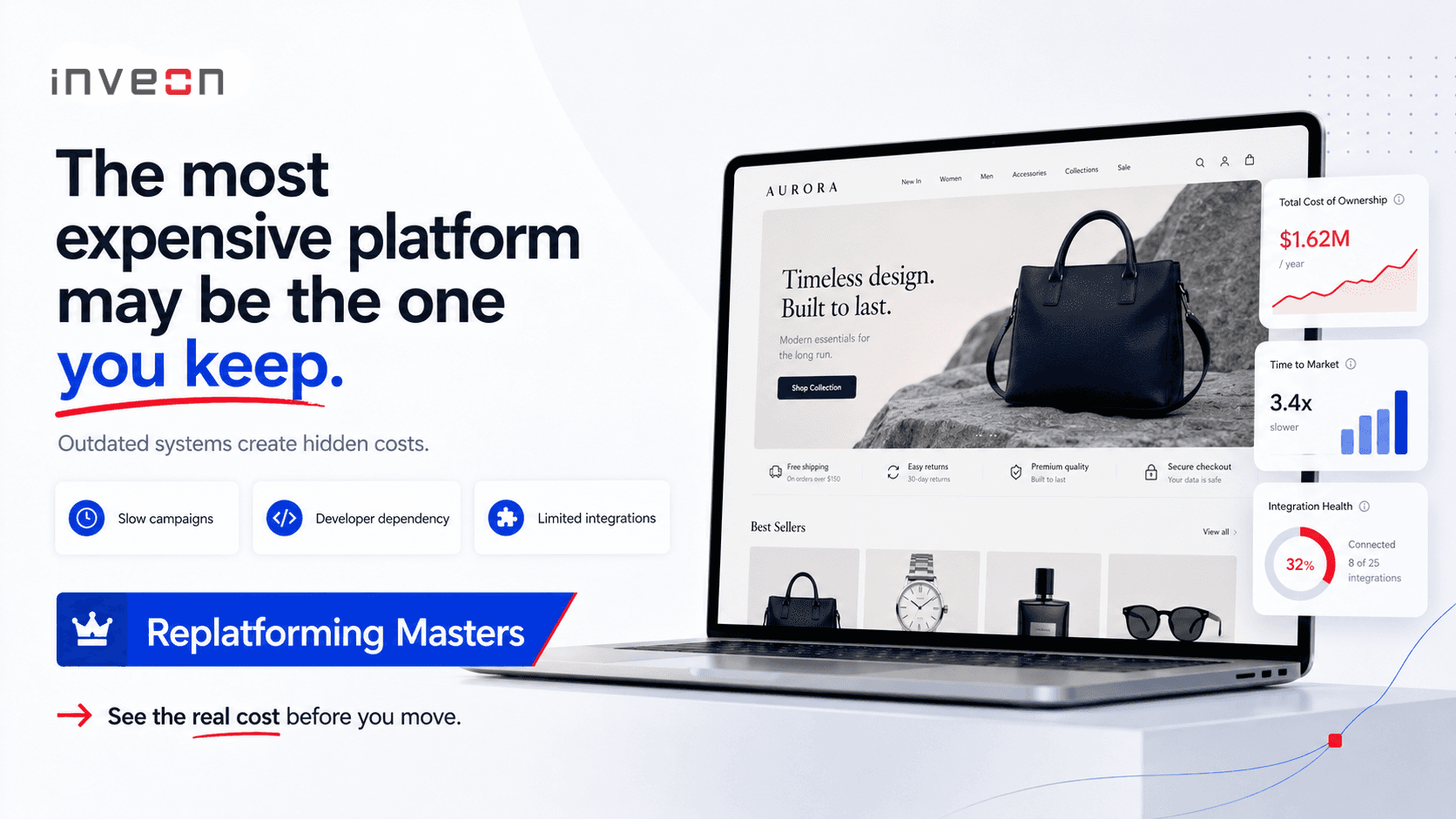
Ecommerce Replatforming Cost and ROI: How to Build the Business Case
What actually drives ecommerce replatforming cost, which budget lines teams underestimate, and how to build an ROI model that compares the investment against the cost of staying on the current platform.
Jun 10, 2026

The Complete Ecommerce Replatforming Checklist for 2026
A practical framework for planning and executing ecommerce replatforming without treating migration as a simple platform switch.
May 7, 2026